
Milan
Papuan coffee finds its way to Denmark: Meet the producer Moses Yigibalom
In the remote highlands of Papua, Moses Yigibalom sparked a coffee revolution. Against a backdrop of abandoned farms and a community drifting away from its coffee-growing heritage, Moses made a bold decision to return home and revive his family’s coffee farm.
This is the story of how Moses, together with the local community of coffee farmers, is transforming the future of Papuan coffee.

The Papuan coffee visionary
Since the young age Moses was surrounded by the sights and scents of coffee. His father, Piet, had been a steadfast coffee farmer for decades, even when others in their community turned to more lucrative crops like sweet potatoes. “The coffee we produce is extraordinary.” Piet would often say, words that Moses carried with him throughout his life.
Moses’s journey took a turn when he left Papua in 2010 to pursue higher education. He studied Public Administration at Pasundan University and later transferred to Waskita Darma College of Social and Political Sciences in Malang. During these years away, Moses supported himself through a small screen-printing business. But despite his success in Malang, the call of his roots was strong.
Upon graduating in 2016, Moses decided to return to Papua, bringing with him a coffee grinder he had purchased in Malang, a symbol of his commitment to his family’s coffee legacy. Back home, he found many coffee farms neglected and overgrown. The potential was there—over 800 hectares of coffee plantations—but the trees were unpruned, the fruits small and rarely harvested.
Building a community
Determined to revive the coffee farms, Moses reached out to local farmers. He encouraged them to care for their plants and offered to help with the harvest. “If you’re too tired to harvest, just call me. I’ll come to the farm and help with the coffee harvest,” he would tell them. Moses understood that the farmers’ reluctance was not due to laziness but because the return on their hard work was too low. He knew that the key was to show them the true value of their efforts.
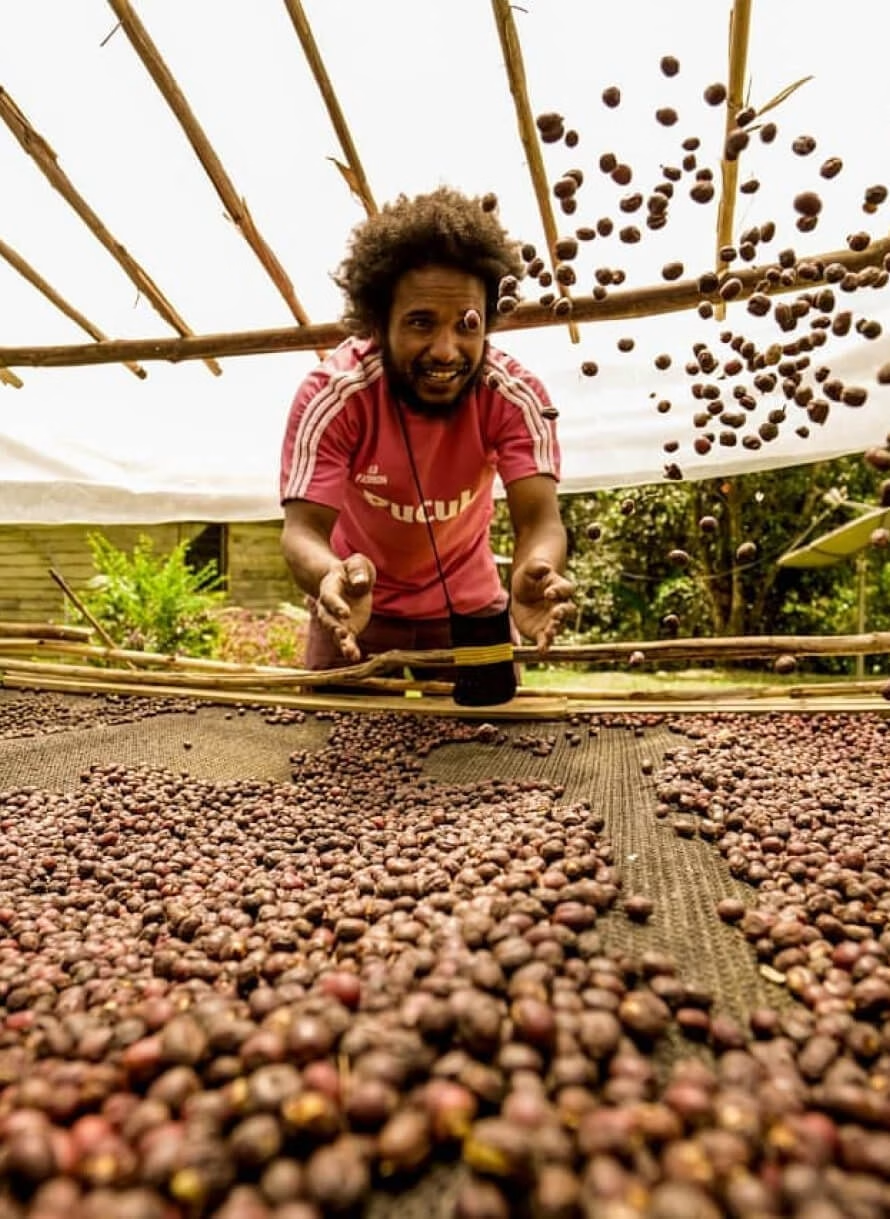
Moses began buying coffee cherries from local farmers at three times the market price, ensuring they were fairly compensated. He and his father, Piet, shared the workload—Piet managed the farm while Moses processed the coffee using traditional methods. They peeled, washed, and dried the beans with care, preserving their quality and flavor.
Thanks to the community’s dedication, the region can now consistently produce high-quality coffee. However, due to the small scale of production, this coffee remains very limited, so having the opportunity to drink it is very much an exclusive experience.
Roasted in historical Yogyakarta
Moses’s efforts didn’t go unnoticed beyond Papua thanks to Denny, owner of micro-roastery called Sebelah Kopi. Denny also coms from Papua and has strong connections to the local coffee farming community. He roasts their coffee, and serves it in his cosy coffee shop in the northern part of Yogyakarta.
Because of the high-altitude and limited Papuan infrastructure the transportation of Moses’s coffee from his farm has to be done by a small plane to the nearest airport and then putting it on another plane to Yogyakarta which imposes many challenges, but the results are worth the effort.
Moses’s coffee finds its way to Denmark
When we visited Indonesia in search for the most interesting coffees we were very impressed by the quality of the green bean as well as Denny’s roasting and decided to feature it in our coffee lineup. His premium coffee beans have now found their way to Denmark.
Thanks to our exclusive partnership with Denny, Danish home-brewers can now enjoy this exclusive coffee which can be soon found on our online shop!